


 Türkçe
URLA
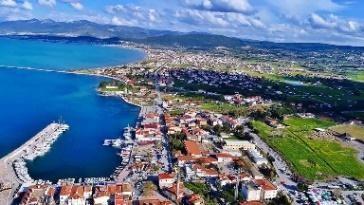
Urla, located approximately 40 km from the center of Izmir, is easily accessible. You can reach it by private vehicle or by public transport. Urla has many places to visit, historical sites, natural and cultural beauties. Considered an important place by different civilizations throughout history, Urla also offers a journey through history with its ancient ruins. Art and culture also hold an important place in Urla. You can enjoy a peaceful seaside holiday in Urla’s beaches and hidden coves. Many of the beaches are Blue Flag beaches.
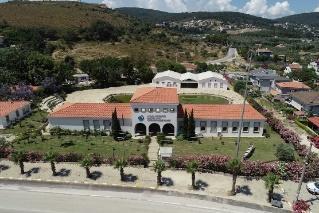
Ankara University Mustafa Vehbi Koç Marine Archaeology Research Center
The center, consisting of five different units, includes a restoration laboratory of great importance in underwater studies, a storage area, a library intended to host national and international research, a conference hall to serve the region, a 4-acre exhibition area where reconstructions reflecting developments in maritime technologies from ancient times to the present day will be displayed, and a dormitory with a capacity of 30 people for participants working on the projects.
Olive Route
Urla, where Evliya Çelebi praised the date olives, is a place with monumental olive trees that bear witness to history and a vast knowledge of olive oil! When it comes to olives and olive oil, there is much to be said about Urla. Excavations at Limantepe have unearthed small hand mortars used to crush olive kernels dating back to 3000 BC, grinding stones, ceramic vessels used to separate olive oil from wastewater, and olive oil storage facilities from later periods.
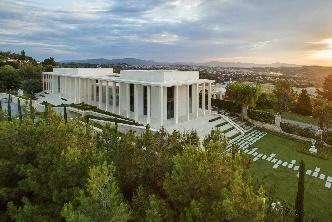
Arkas Art Urla
The Arkas Collection, a comprehensive collection encompassing many different art and craft fields, consists of works by artists from Turkey and abroad, including paintings, sculptures, carpets, armor, and glass objects, shedding light on different periods. Works from the Arkas Collection are exhibited periodically in important museums both in Turkey and abroad, in addition to numerous exhibitions held at the Arkas Art Center.
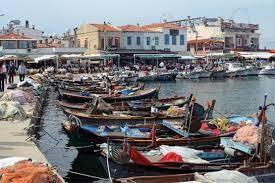
Urla Pier
Considered the center of Urla, Urla Pier is one of the most popular spots in the district, offering impressive views at any time of day. It is particularly regarded as an important location for transportation to the district during ancient times. Food and drinks can be obtained from the restaurants and cafes located next to the pier.
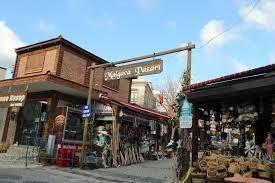
Malgaca Market
Also known as Arasta, this historical market, which is stubbornly being kept alive today, consists of coffee shops, cafes, herbalists, and stalls selling organic products. It is among the oldest known commercial centers of Urla.
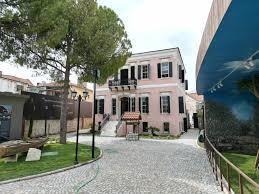
Urla City History and Archive (UKTA) Museum
The UKTA Museum, where the historical and cultural values, traditions, and customs of Urla are compiled and recorded, opened to visitors in May 2023. The historic Arditi Mansion (formerly the Tobacco Monopoly Building), one of the town’s oldest structures, was restored through architectural design and implementation, and redesigned as an archive and exhibition space for the UKTA Museum in line with a modern museum concept.
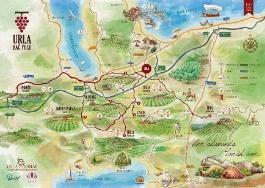
Urla Wine Route
From ancient times to the present day, the region has made a name for itself with winemaking, considered unique and indispensable by the Ionians, Persians, Romans, and finally the Turks. The fertile vineyards of the Urla Wine Route cultivate international wine grape varieties as well as local wine grapes. The first red wines were also produced using Urla’s ancient grape varieties: Urla Karası, Gaydura, and Foça Karası.
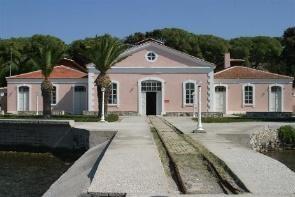
Quarantine Island
Used during the Ottoman period to prevent the spread of infectious diseases. The first Ottoman quarantine zone was established by the French in 1865. The facility was intended for merchant and passenger ships, and especially for pilgrims arriving on the northern pilgrimage route, and remained active until 1950. Built 150 years ago, this quarantine facility, where initial treatment for deadly diseases was provided, was among the leading health centers of its time.
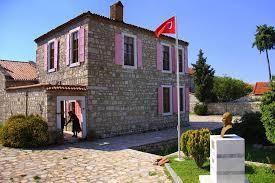
Necati Cumalı Memorial and Cultural Center
The family home where Necati Cumalı spent his childhood was donated by the author to the Urla Municipality before his death and transformed into a memorial center. Restored by the Urla Municipality, the house opened to the public in 2001. Established to promote Necati Cumalı’s works and keep his memory alive, the center displays the author’s personal belongings, the typewriter he used while writing his works, and various editions of Necati Cumalı’s books.
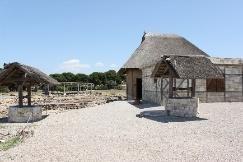
Ancient City of Klazomenai
Klazomenai, one of the twelve Ionian cities located in Urla, stretches from Limantepe to the foothills of Ayyıldız and Cankurtaran hills in the west. A portion of it is located on Karantina Island. The olive oil workshop, whose excavations have been completed in Klazomenai, proves that the technology used today was first developed in this region 2600 years ago.
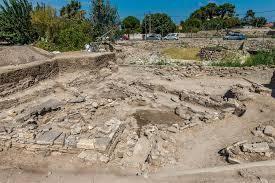
Limantepe Excavations
Located in the İskele neighborhood on the coast of Urla, Limantepe reflects all cultures uninterruptedly, at least from the 4th millennium BC to the end of the 2nd millennium BC. Considering the ancient city of Klazomenai as well, cultural continuity extends until the end of the Classical Age. This characteristic is only seen at Limantepe in Western Anatolia. The prehistoric centers identified and excavated in the İzmir region, along with Limantepe, reveal a significant cultural accumulation.
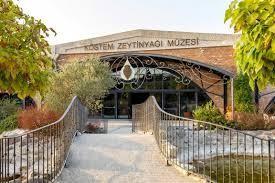
Köstem Olive Oil Museum
Located in Urla, it holds the distinction of being the world’s largest olive oil museum complex. The museum showcases all olive oil production techniques used in Turkey from the past to the present. In line with recent advancements in museology, it also incorporates educational, learning, research, scientific, artistic, design, and project-based functions. Köstem Olive Oil Museum is essentially a technology museum.
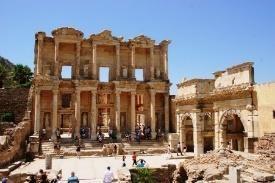
Ephesus Ancient City
Located in Selçuk, Ephesus is a UNESCO World Heritage Site. One of the most important centers of antiquity, Ephesus has seen continuous settlement for approximately 9000 years, from prehistoric times through the Hellenistic, Roman, Eastern Roman, Beyliks, and Ottoman periods, and has been a very important port city and cultural and commercial center throughout its history. The House of the Virgin Mary, Ayasuluk Hill, the Basilica of Saint John, and Çukuriçi Mound, also located in the same area, should definitely be visited. The distance between Urla and Ephesus is 58 km.
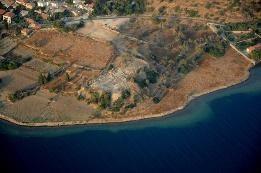
Erythrai Ancient City
Located 20 km northeast of Çeşme, the village of Ildırı was known as Erythrai in ancient times. Findings indicate settlement since the Early Bronze Age. It is believed to have been inhabited and settled from the 8th century BC to the 4th century BC. The findings, which reveal its active role in the socio-political changes of the ancient Ionian region, point to the Hellenistic and Roman periods. The distance between Urla and Ildırı is 44 km.
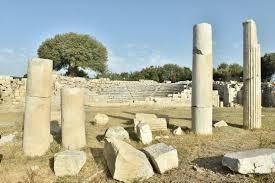
Teos Ancient City
Located on the seafront within walking distance of Sığacık, Teos was the capital of Northern Ionia until 3,000 years ago. Its founder is known as Athames, the son of Dionysus. Teos held an important place in architecture and trade during the ancient period. It was a city that once opened its doors to artists who were expelled from the Ionian city for allegedly causing unrest, and it was the first city in history where an Artists’ Union was established. Very old olive and terebinth trees are natural monuments of the ancient city. One of these olive trees is the Teos Ancient Olive Tree, which has become a symbol of the city and is approximately 2000 years old. The distance between Urla and Sığacık is 36 km.
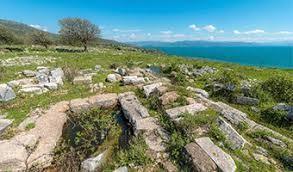
Notion Ancient City
Notion, a port city, is located within the boundaries of today’s Ahmetbeyli village. It is 15 km from Kolophon. The Acropolis, called “Kale” (Castle) by the villagers today, sits on two hills, and the temple dedicated to Athena Polias, the city’s chief goddess, is situated on the western hill of the Acropolis, completely overlooking the sea. Two gates, one on the west and one on the north, are still standing. The Acropolis offers a magnificent sea view towards Samos Island and Kuşadası. The city walls, built during the Hellenistic period, are in very good condition. At the eastern end of the city are the theater, agora, and bouleuterion, and at the western end, a very small Temple of Athena in the middle of a courtyard. The distance between Urla and Notion Ancient City is 66 km.
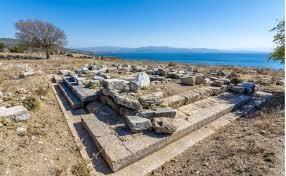
Kolophon Ancient City
Located east of Değirmendere neighborhood, Kolophon is the only Ionian settlement not built on the coast. It is one of the twelve Ionian cities. Despite possessing a strong navy and cavalry, it suffered damage in many wars and, even during the time of sea pirates, was ruled by Lydian, Persian, and Macedonian forces. After Kolophon was destroyed by Lysimachus in 302 BC, its neighboring city, Notion, gained importance. The distance between Urla and the ancient city of Kolophon is 35 km.